|
| ||||||||||
| ||||||||||
|
| ||||||||||
Case Study Club | ||||||||||
|
The weekly read for designers who shape products.
| ||||||||||
|
| ||||||||||
| ||||||||||
Bottled judgment | ||||||||||
|
An essay called Bottle your judgment showed up three times in my feeds this week. The idea: write down how you make decisions, so your judgment still works when you are not in the room. Some teams take it literally and keep DESIGN.md files, design standards written so AI tools can follow them. | ||||||||||
|
I work this way every day. My whole pipeline runs on instruction files: my preferences, written down for machines to execute. Writing them was a pain. I had to cut a lot, not for my sake, for the machine's. Too many instructions and the AI breaks. Too few and it goes overboard. The line between is thinner than you would think. | ||||||||||
|
If your judgment only exists in your head, nobody can use it but you. Writing it down is how you make sure your team ships quality work with your judgment built in. | ||||||||||
|
| ||||||||||
| ||||||||||
|
Nielsen Norman Group published PROVE, a framework for deciding whether an AI tool actually improves a task before it earns a place in the workflow. NN/g | ||||||||||
|
| ||||||||||
|
NN/g also drew the line between dogfooding and research: internal use catches bugs and says little about how unfamiliar users behave. NN/g | ||||||||||
|
| ||||||||||
|
Figma measured Code Connect over MCP: with component mappings in place, agents stop regenerating production code and finish design-to-code tasks with fewer tokens. Figma | ||||||||||
|
| ||||||||||
|
Agent plugins proposes a portable package format so AI agent capabilities can move between systems. agent-plugins.org | ||||||||||
|
| ||||||||||
|
The State of CSS 2026 survey results are out. State of CSS | ||||||||||
| ||||||||||
|
| ||||||||||
| ||||||||||
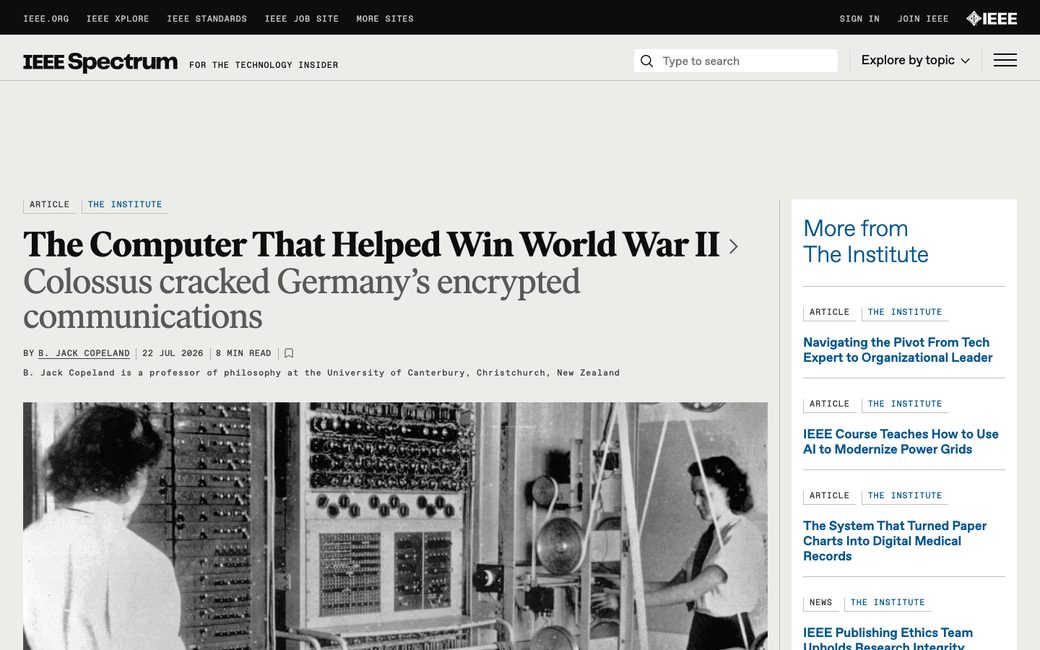
spectrum.ieee.org IEEE Milestone, 2026
| ||||||||||
The computer that officially did not exist | ||||||||||
|
Colossus is the electronic machine the British built during the Second World War to break the German Lorenz cipher, running on thermionic valves and processing encrypted traffic faster than any mechanical method could. It accelerated the codebreaking effort and then vanished from the record: the design stayed classified for decades, so the engineers behind the fastest computing machine of its era could not cite their own work. IEEE has now designated Colossus a milestone, official recognition for a machine that spent decades officially not existing. | ||||||||||
|
| ||||||||||
| ||||||||||
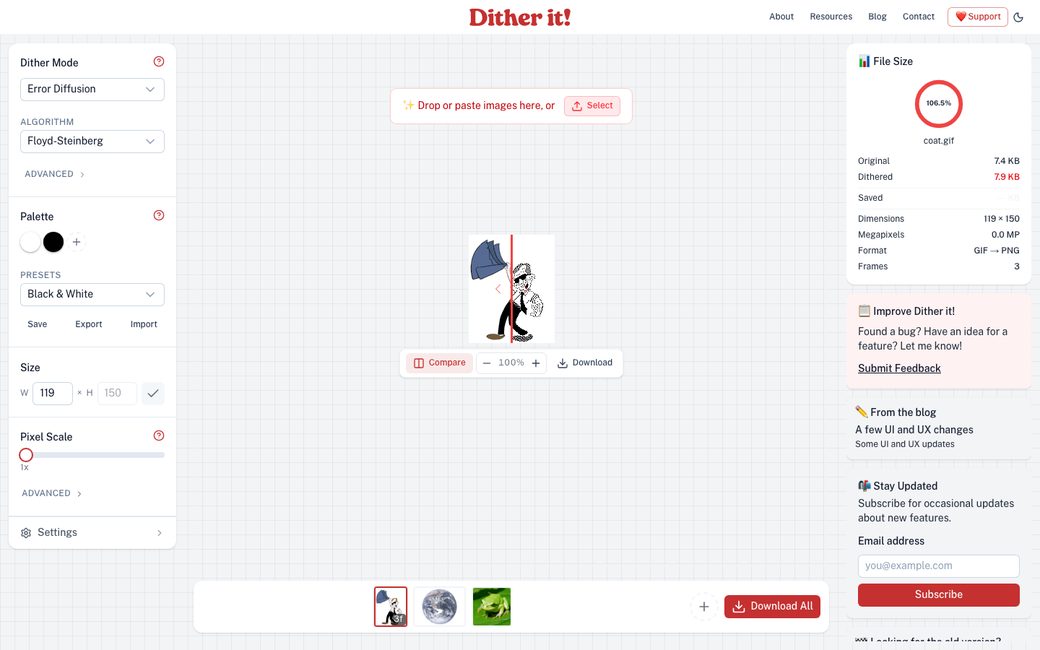
ditherit.com Web tool, 2026
| ||||||||||
Dithering without the command line | ||||||||||
|
Dither It converts images into dithered versions in the browser, with the classic algorithms on tap: Floyd-Steinberg, Atkinson, Bayer ordered. It handles animated GIFs and batch uploads, and it is free. Dithering usually means command-line tools or old Photoshop tricks; this is the no-friction version. For retro texture, limited palettes, or shrinking an image to almost nothing, it does the one job well. | ||||||||||
|
| ||||||||||
|
Written and edited by Jan Haaland. Published weekly from Norway. | ||||||||||
|
Forwarding this to one person is the best way to support Case Study Club. If someone comes to mind, please send it their way. | ||||||||||
| ||||||||||
|
|