|
| ||||||||||
| ||||||||||
|
| ||||||||||
Case Study Club | ||||||||||
|
The weekly read for designers who shape products.
| ||||||||||
|
| ||||||||||
| ||||||||||
One step closer to the product | ||||||||||
|
In June, a two-hour AI primer I ran for the designers at Webstep turned into group therapy. | ||||||||||
|
The occasion was a warm-up for the full-day workshop I'm hosting in November. I demoed Claude Code and Paper live and set aside real time for discussion. That time filled instantly. "We're behind," someone said. These are enterprise designers who got their first taste of AI inside Figma this year. Another voice: "I don't want to live in a terminal. I need my canvas." | ||||||||||
|
That feeling is the industry's. Lenny's annual survey found half of tech workers destabilized by AI, with designers reporting the highest anxiety of any role. | ||||||||||
|
Designers might be wrong about why they feel behind. The tools are an afternoon of setup, and the workflow is already moving back to surfaces we recognize: Paper puts the new stack on a canvas, Conductor runs Claude Code without ever showing you a terminal. | ||||||||||
|
Discovery is still a huge part of product design, and AI can't do that part well. Execution, well, we all see where this is going. | ||||||||||
|
Apparently we need to talk about this, out loud, in rooms. So we can finally win our sanity back. | ||||||||||
|
| ||||||||||
| ||||||||||
|
Ioana Teleanu, who led AI design at Miro, tracks the AI-and-design shift weekly in her AI Goodies newsletter. AI Goodies | ||||||||||
|
| ||||||||||
|
Mitch Paone, the designer behind Dia Studio and Mnky Type, has died; his workshops opened with jazz on a Fender Rhodes. Creative Review | ||||||||||
|
| ||||||||||
|
Koto launched CCType, a commercial type foundry, with debut release CC Timeline. It's Nice That | ||||||||||
|
| ||||||||||
|
Porto Rocha shipped Tinder's first rebrand in nearly a decade, written in the voice of a dating columnist. It's Nice That | ||||||||||
|
| ||||||||||
|
Apple's rounded-square mandate has ended three decades of free-form app icon shapes on the Mac. Parakeet | ||||||||||
|
| ||||||||||
|
Moonshot AI's Kimi K3 tops the Arena frontend-code leaderboard and releases as an open-weight model today. Design Observer | ||||||||||
| ||||||||||
|
| ||||||||||
| ||||||||||
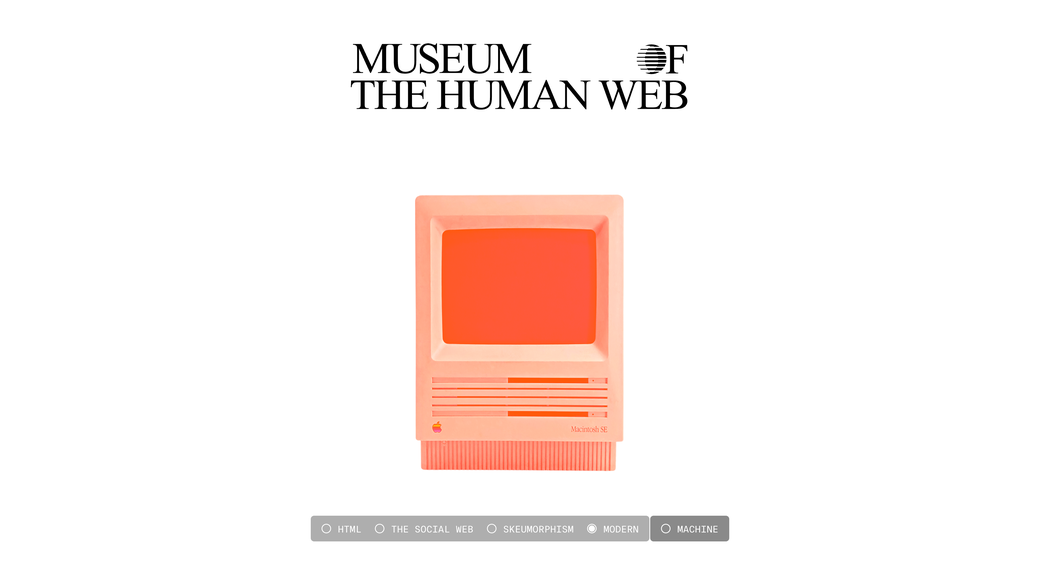
museum.parallel.ai Digital museum, 2026
| ||||||||||
A museum for the hand-built web | ||||||||||
|
The Museum of the Human Web collects artifacts from the internet people built by hand, from ARPANET to the eve of ChatGPT. The wings carry plain names: HTML, the social web, skeuomorphism, modern. The framing is blunter than the usual retrospective; the collection calls its holdings "relics of the last time we did this alone." | ||||||||||
|
"Creation is becoming a collaboration with machines," the introduction reads. So the museum treats the hand-built web as a finished era, something to preserve while the people who made it can still label the boxes. Proceeds from its artifact sweepstakes go to the Internet Archive and the Computer History Museum. | ||||||||||
|
It earns the slot on one strength: this is where today's interface conventions come from. The patterns we treat as defaults were decisions on somebody's hand-made page, and the museum lets you visit them where they were made. | ||||||||||
|
| ||||||||||
| ||||||||||
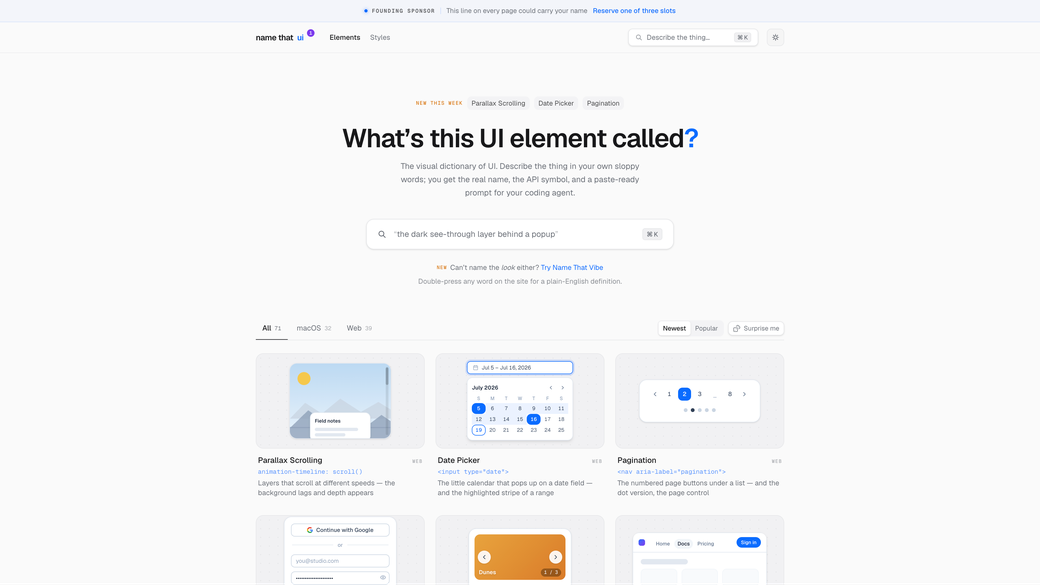
namethatui.com Reference, 2026
| ||||||||||
The real name for every interface element | ||||||||||
|
Name That UI is a visual dictionary of interface elements: 71 components across web and macOS, each with its proper name, its API symbol, and a paste-ready prompt for a coding agent. The pitch, in the site's own words: "describe the thing in your own sloppy words; you get the real name." | ||||||||||
|
The search placeholder carries the whole idea: "the dark see-through layer behind a popup." The mismatch it solves is old (designers and developers naming the same element differently) and newly expensive, since a coding agent takes your words literally. Double-press any word on the site for a plain-English definition. Free, in the browser, and faster than the screenshot-and-arrow routine. | ||||||||||
|
| ||||||||||
|
Written and edited by Jan Haaland. Published weekly from Norway. | ||||||||||
|
Forwarding this to one person is the best way to support Case Study Club. If someone comes to mind, please send it their way. | ||||||||||
| ||||||||||
|
|